


The Lurra House in Hyderabad celebrates the natural features despite it central urban location in the city. A refined and intrinsically detailed framing of vertical structural timber posts and slender horizontal mullions lend a sense of scale and proportion to the elevation. A continuous verandah that moves inwards and outwards defines the interiors as much as it defines the exteriors and therefore strengthens the dialogue between the two.

This housing scheme in Goa is set within the hills along the Mormugao Bay, neighbouring the Nauxim village, and is gifted by nature with unobstructed views of the Zuari river. Its looped, courtyard housing typology shapes two communal gardens. From here, nature is allowed to continue upwards onto the roofscape, blending seamlessly with the surrounding landscape. The scheme is deigned as a dense yet diverse ribbon, expressing both craftmanship and geometric rigour.

Located in a 50-year-old former garment mill in Worli, our 3,500 sq. ft. studio combines open, flexible spaces with natural materials. By removing walls and adding an oversized staircase the movement, light, and ventilation in this Mumbai Architecture Studio is enhanced. The design balances industrial elements with warm touches, featuring earthy tones, a Frangipani tree, and an Ena De Silva tapestry, creating an inspiring workspace.
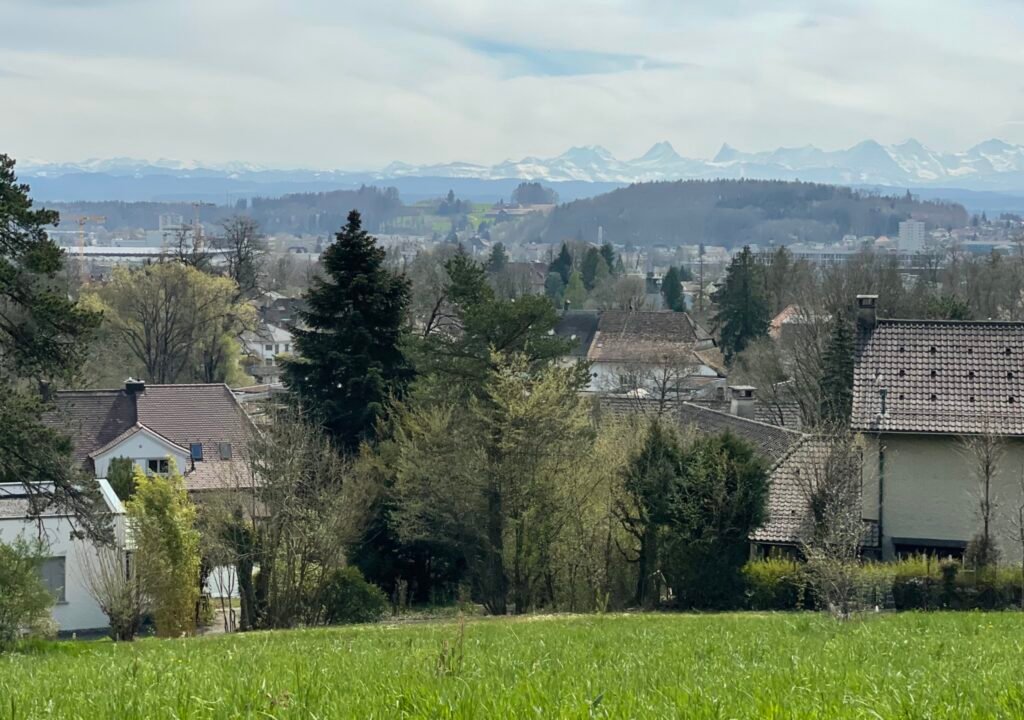
This private family house in Switzerland is set within the beautiful Jura mountain range, and draws inspiration from the surrounding geological formations and traditional local barns in its geometry and materiality. Each room and window have been positioned and oriented to frame and enjoy the magnificent views of the Alps and nearby valleys.
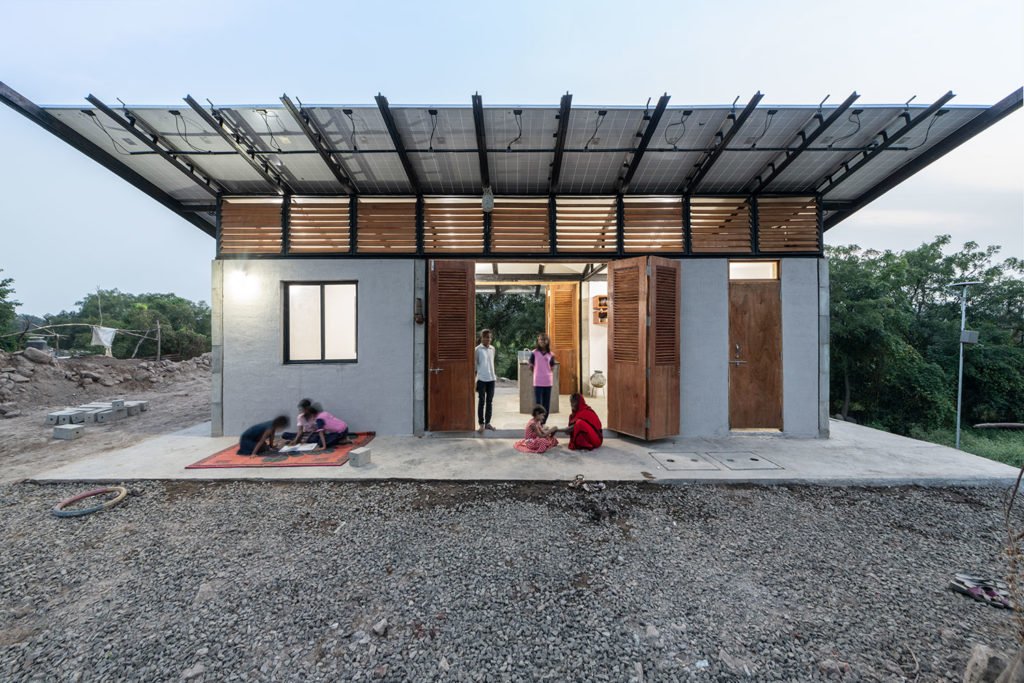
BillionBricks Homes is the world’s first carbon negative, self financing home for the homeless. It address the scarcity of homes across rural communities and the impossibility of access to financing. It is a radical concept in housing designed for ‘energy sufficiency’ and ‘extreme affordability’. The structure of the house is built in an indigenous prefab assembly technique that makes it easy to assemble in remote locations.
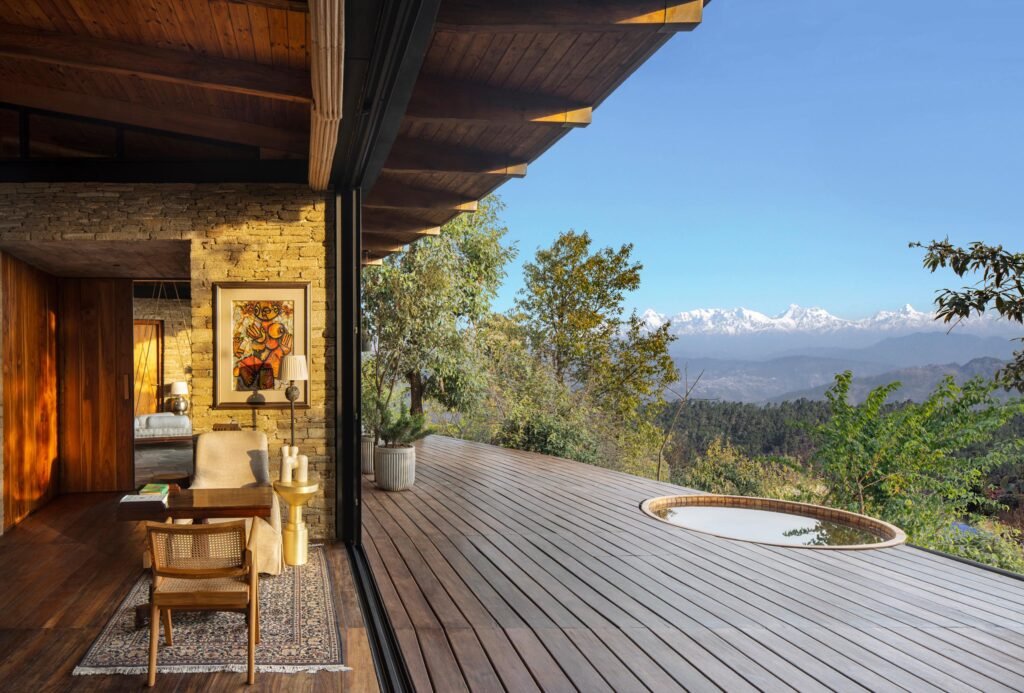
The Himalayan Mountain Home is a collection of thoughtfully crafted pavilions nestled into the terraced slopes of Sitla, surrounded by dense forests and orchards. Each structure harmonizes with its unique setting, framing the breathtaking Himalayan panorama. Designed as a sanctuary, it invites a deep connection to nature through serene, intimate spaces and ever-changing views.
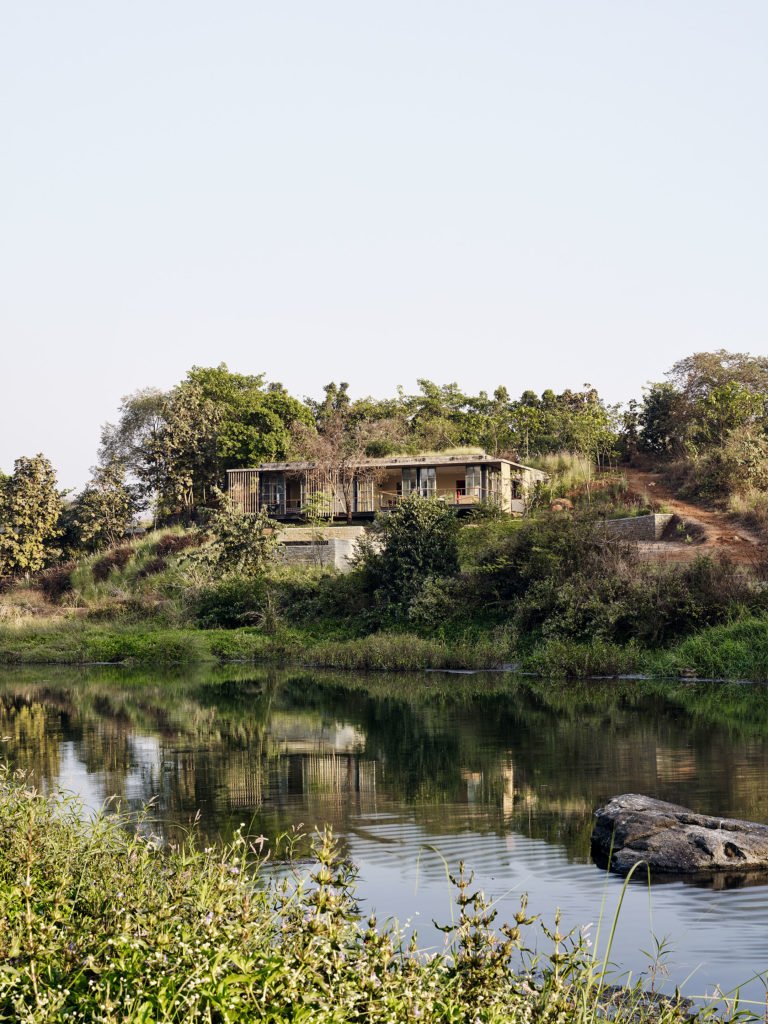
The Riparian House is placed below the crest of a hillock at the foothills of the Ghats near Mumbai. The top of a vegetated roof merges with the top of the hillock, hiding the house while approaching. A bamboo screen surrounding a deep verandah causes an ever-changing pattern of light and shadow throughout the seasons and times of the day, making the Riparian House a ‘sensor’ of light.

With a stream running through the house, this retreat in Alibag delicately weaves into the landscape. It alternately opens up and closes itself to the different characteristics of the site. The house is like an organism trying to make most use of its resources and surroundings. With its several limbs, it reaches out into the landscape. Each “limb” makes full use of the views within the site and dramatizes special moments.
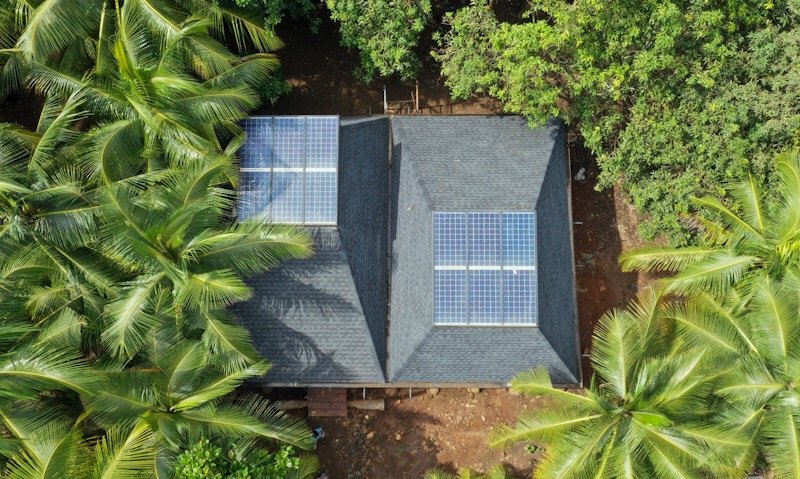
The Mumbai Artist Retreat is conceptualised as a community space. It is an art lab of sorts, that aims to bring together art, ecology and society. One of the buildings on the retreat is an Artist workshop. The completely self sufficient pavilion is a 12m x 10m “tropical shed” with two roofs that are each six meter high. Two solar panelled skylights chop off the pyramid shaped roofs on the top.
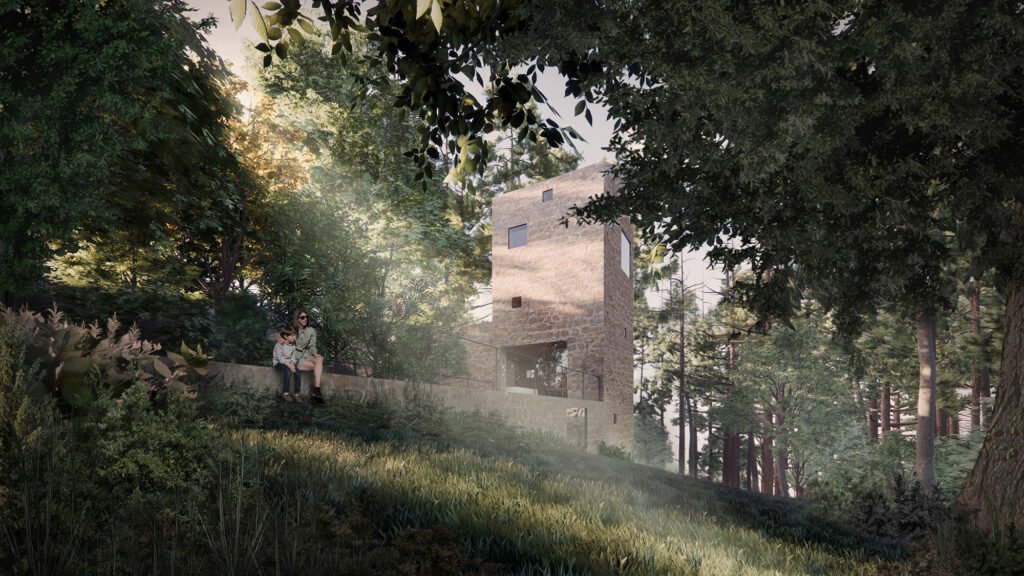
This nature retreat located in the heart of the Ardennes forests in the south of Belgium reflects the combination of local heritage and contemporary architecture. Four storey stone tower provides unique experience and magnificent views towards surrounding nature.
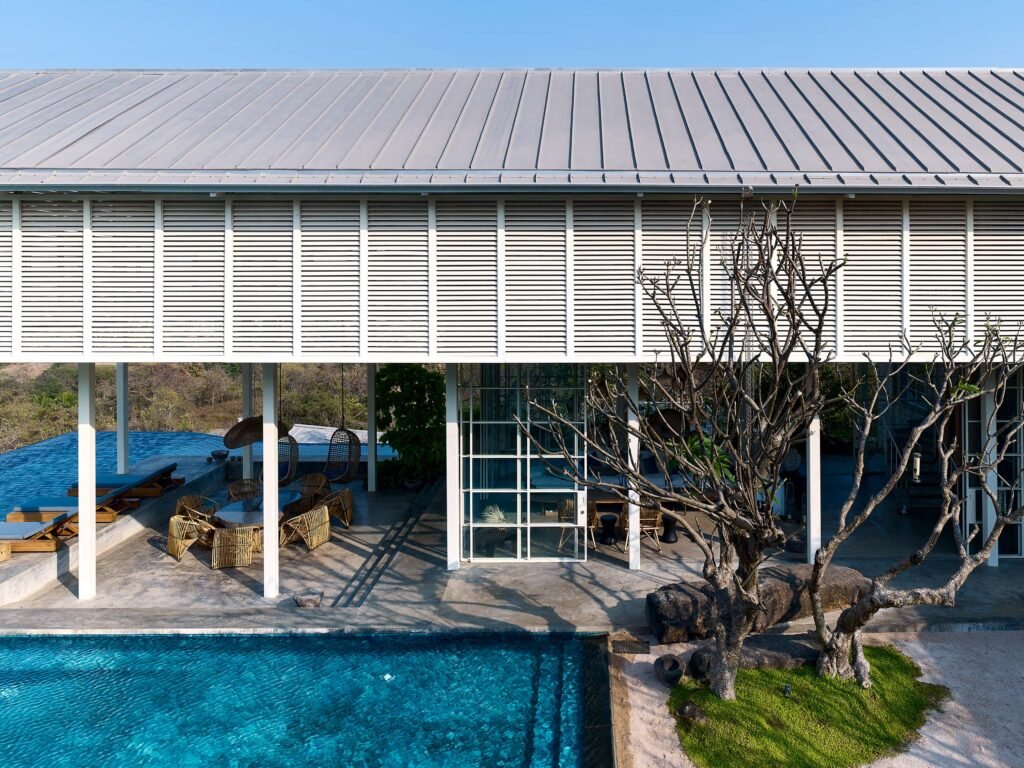
The Ray Villa in Alibag emphasises on the profile of the built form in relation to the hilltop property overlooking the Mumbai bay. Two staggered linear pavilion-like structures, directed towards the view, define the character of the house. They are strong manifestations that act as long spatial telescopes, bringing the distant sea views seemingly closer by.
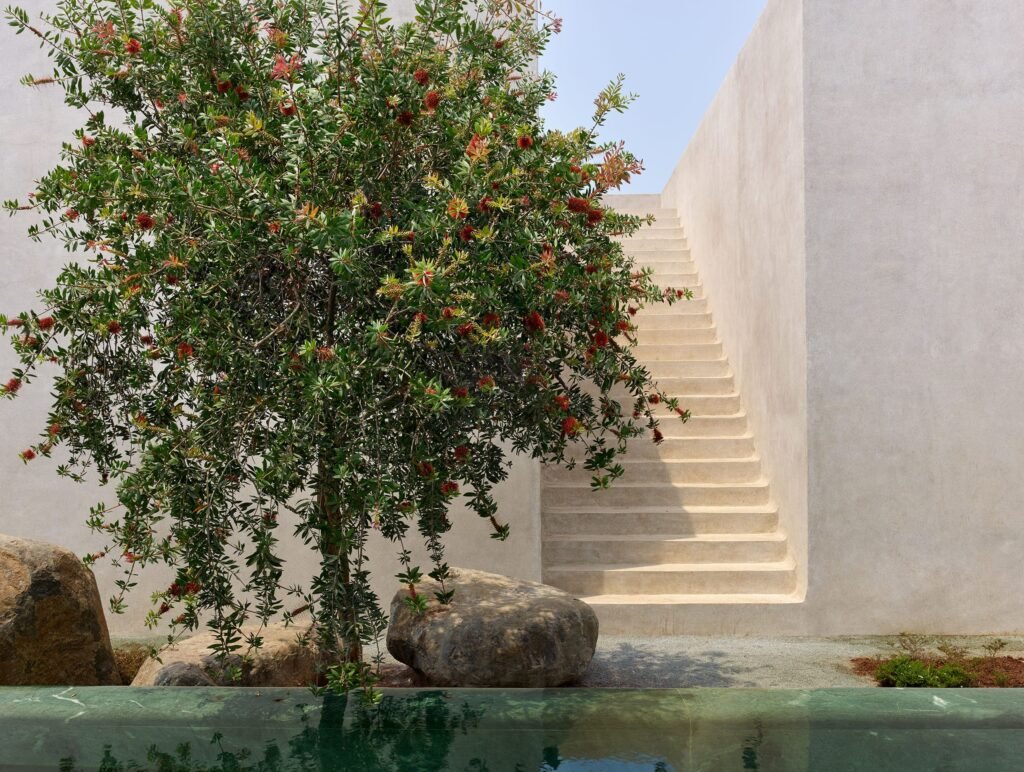
While DUA Villa extends across more than 2000 square metres, it isn’t its scale that captivates. What stands out instead is its quiet confidence—an unspoken reverence for nature that permeates every corner. The villa doesn’t shout for attention; it gently celebrates the essentials: light, air, and the generosity of the land, all while nodding to the beauty of mystery, simplicity, and restraint.